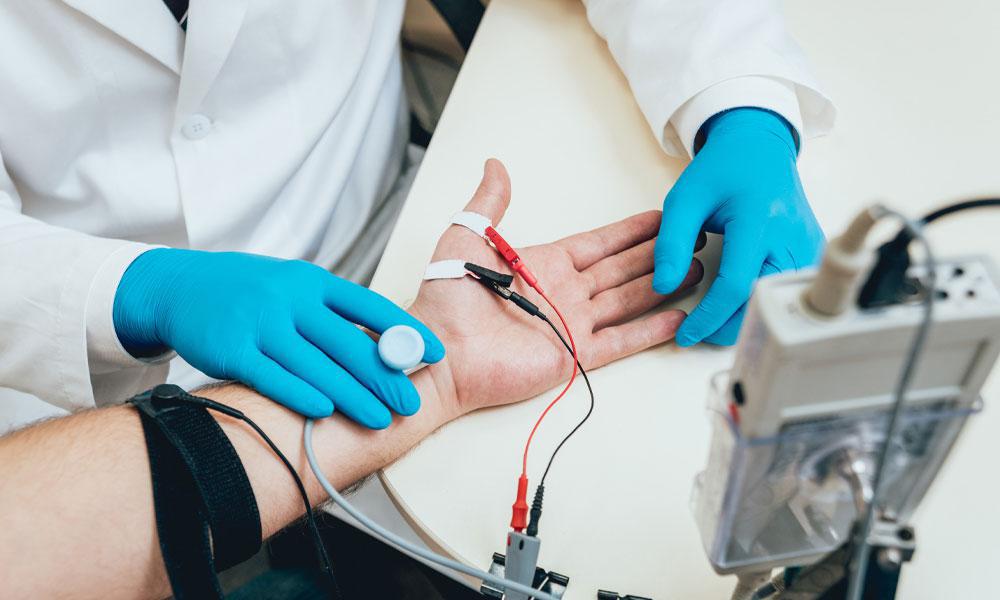
A nerve conduction test (or nerve conduction study) measures the speed and strength of electrical signals traveling through your nerves. By pinpointing how well these impulses move, it helps doctors diagnose peripheral nerve damage, muscle disorders, and compression syndromes like carpal tunnel.
How it Works
During the test, a specialist applies small, sticky electrode patches (surface electrodes) to your skin along the path of the nerve being tested.
Stimulation: One electrode delivers a very mild, safe electrical pulse to stimulate the nerve.
Recording: Another electrode measures the speed and strength of the nerve’s response.
Calculation: By measuring the distance between electrodes and the time it takes for the signal to travel, the specialist calculates the signal’s velocity.
Electromyography
Electromyography (EMG) is a diagnostic procedure that evaluates the health of muscles and the nerve cells that control them. By measuring the tiny electrical signals produced by muscle tissue, an EMG helps doctors diagnose nerve damage, muscle diseases, and conditions that interfere with signal transmission.